Insights
SPEEDY TRIAL IS ALSO A RIGHT OF THE VICTIM SUPREME COURT HOLDS ACCUSED CANNOT STALL OTHER CRIMINAL TRIALS BY RELYING ON PENDING GANGSTERS ACT PROCEEDINGS

In today’s highly regulated commercial environment, regulatory investigations have become an increasingly significant risk for companies operating across financial, corporate, employment, technology, environmental, consumer and other regulated sectors. A regulatory inquiry may arise from suspected statutory violations, whistleblower complaints, consumer grievances, accounting irregularities, market conduct concerns, data breaches, tax discrepancies, corporate governance failures or allegations of fraud.
Family-owned enterprises constitute a significant component of India's commercial landscape and frequently combine business ownership, management, family relationships and inter-generational wealth within a single organisational structure. While such enterprises may benefit from long-standing relationships, concentrated ownership and a strong entrepreneurial legacy, the absence of a structured succession mechanism can create substantial legal and commercial uncertainty when ownership or management passes from one generation to another.In Sameem Begum and Others v. K. Venkat Swamy and Another, decided on 14 August 2026, the Supreme Court examined the relationship between the concepts of legal representation, financial dependency and consortium in motor accident compensation claims. The Court held that legal representatives are entitled to maintain a claim for compensation even in the absence of actual financial dependency. The extent of dependency may have a bearing upon the quantum of compensation under particular heads, but it does not extinguish the right to maintain the claim.
The Supreme Court of India, in Balku Oram v. State of Odisha, delivered a strong constitutional and social message while dismissing an appeal against a conviction for murder arising from an allegation of witchcraft. While upholding the life sentence imposed on the appellant, the Court expressed deep concern over the continuing prevalence of witch-hunting and the manner in which superstition, prejudice and irrational fear can override the principles of constitutional morality and the rule of law.
In a significant judgment concerning compensation under the Motor Vehicles Act, 1988, the Supreme Court of India has reiterated that a person does not lose the status of a legal representative merely because he or she is not financially dependent upon the deceased. In Sameem Begum and Others v. K. Venkat Swamy and Another, decided on 14 August 2026, the Supreme Court examined the relationship between the concepts of legal representation, financial dependency and consortium in motor accident compensation claims. The Court held that legal representatives are entitled to maintain a claim for compensation even in the absence of actual financial dependency. The extent of dependency may have a bearing upon the quantum of compensation under particular heads, but it does not extinguish the right to maintain the claim.
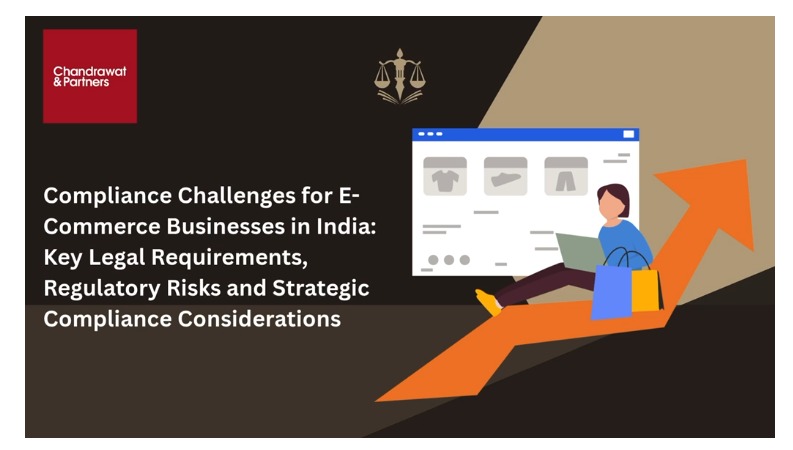
The rapid expansion of India's digital commerce ecosystem has fundamentally transformed the manner in which businesses market, sell and distribute goods and services. E-commerce enterprises now operate across a complex regulatory landscape involving consumer protection, taxation, data privacy, intellectual property, advertising standards, payment systems, foreign investment, competition law and sector-specific regulations. The scale and speed of online transactions have consequently made regulatory compliance a critical component of sustainable digital business operations.

In today's knowledge-driven economy, intellectual property ("IP") has become one of the most significant sources of enterprise value. Businesses increasingly derive their competitive advantage from trademarks, patents, copyrights, designs, software, proprietary technologies, domain names, trade secrets and other intangible assets. For technology companies, pharmaceutical enterprises, manufacturing businesses, consumer brands, startups and multinational corporations, intellectual property frequently represents a substantial component of the organisation's overall commercial valuation. However, ownership of intellectual property alone does not guarantee effective protection or commercial value. Businesses may possess valuable IP assets without maintaining accurate ownership records, timely registrations, appropriate licensing arrangements or adequate enforcement mechanisms. Unregistered rights, expired registrations, defective assignments, unauthorised use, inadequate contractual protections and undisclosed third-party claims can significantly diminish the value of an IP portfolio.
The Supreme Court of India has delivered an important ruling strengthening the regulatory framework governing insider trading under the SEBI (Prohibition of Insider Trading) Regulations, 2015. The Court has held that where a person is in possession of Unpublished Price Sensitive Information (UPSI) and trades in securities during the period when such information remains unpublished, the regulatory framework raises a presumption that the trade was motivated by the UPSI. In a significant departure from arguments based on the purpose or motive behind a transaction, the Court clarified that the reason for undertaking the trade, the use of the sale proceeds, or the extent of profit or loss avoided is not relevant to determining whether insider trading has occurred under the 2015 Regulations.