Insights
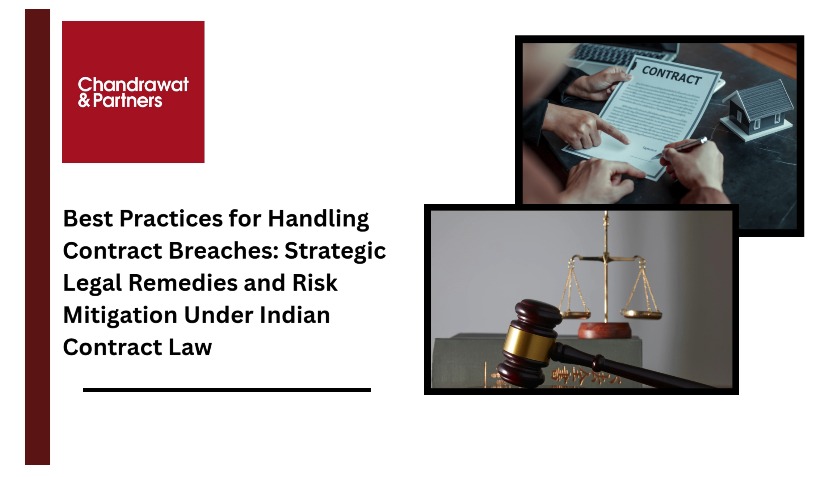
In the modern commercial landscape, contractual relationships form the foundation of virtually every business transaction, whether involving supply arrangements, service agreements, joint ventures, technology licensing, infrastructure projects, employment relationships or cross-border investments. Contracts establish legally enforceable rights and obligations that provide certainty, allocate risk and facilitate commercial confidence. However, despite careful planning and negotiation, disputes frequently arise when one party fails to perform its contractual obligations, resulting in what is legally recognised as a breach of contract.
In modern corporate structures, shareholders play a central role in shaping the governance, management and long-term strategic direction of a company. While shareholders are united by a common commercial objective, differences concerning management control, business strategy, profit distribution, valuation, succession planning and governance frequently give rise to disputes that can threaten corporate stability and business continuity. Shareholder conflicts are particularly prevalent in closely held companies, family-owned enterprises, joint ventures and startup ventures where ownership and management functions often overlap.
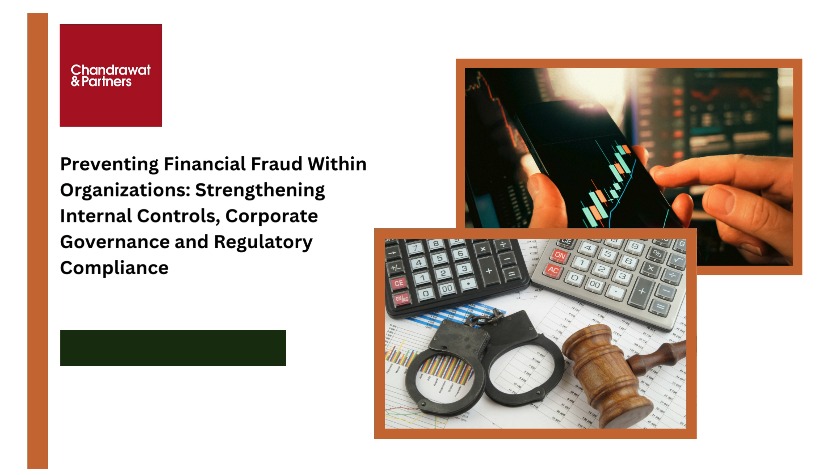
In an increasingly complex and interconnected business environment, financial fraud has emerged as one of the most significant threats confronting corporations, financial institutions, startups and family-owned enterprises. Instances involving embezzlement, accounting manipulation, falsification of records, procurement fraud, unauthorised transactions, bribery, diversion of funds and cyber-enabled financial crimes can result in severe financial losses, regulatory investigations and irreparable reputational damage. Beyond immediate economic consequences, financial fraud undermines stakeholder confidence, disrupts business operations and exposes directors and management to civil and criminal liability.
In a significant judgment concerning suits for specific performance under the Specific Relief Act, the Supreme Court of India has once again emphasized that a plaintiff seeking enforcement of an agreement to sell must continuously demonstrate "readiness and willingness" to perform his contractual obligations from the date of execution of the agreement until the culmination of the proceedings. In Mohammed Khaleel (D) Through Legal Representatives & Others v. Jayamma, decided on 23 June 2026, the Supreme Court dismissed the appeal and upheld the Karnataka High Court's decision refusing specific performance. The Court held that financial documents generated years after the institution of the suit cannot establish readiness and willingness during the relevant period. The judgment was delivered by a Bench comprising Justice Prashant Kumar Mishra and Justice N.V. Anjaria.
In a significant development concerning public healthcare accountability, the Supreme Court of India has refused to interfere with an order of the Allahabad High Court directing a high-level inquiry into allegations that government doctors attached to Moti Lal Nehru Medical College (MLNMC), Prayagraj, have been engaging in private medical practice despite a statutory prohibition. The case, Santosh Kumar Singh v. Arvind Gupta & Anr., has brought renewed attention to a longstanding concern in India's public healthcare system the alleged diversion of government resources, patients, and medical expertise into private healthcare establishments by doctors who are employed full-time in government institutions.

In today’s evolving corporate landscape, maintaining workplace discipline and organisational integrity has become indispensable to ensuring business continuity and preserving stakeholder confidence. As businesses expand and workforce structures become increasingly complex, organisations are frequently confronted with instances of employee misconduct ranging from breach of confidentiality and fraud to harassment, insubordination, conflicts of interest, misuse of company assets and regulatory violations. Such misconduct not only disrupts operational efficiency but may also expose companies to significant legal, financial and reputational risks.
GOVERNMENT REAPPOINTS SOLICITOR GENERAL TUSHAR MEHTA FOR THREE MORE YEARS: CONTINUITY IN INDIA’S TOP LAW OFFICE The Union Government has approved the re-appointment of Senior Advocate Tushar Mehta as the Solicitor General of India for a fresh term of three years, effective from July 1, 2026. The decision, approved by the Appointments Committee of the Cabinet (ACC), ensures continuity in the leadership of the country’s second-highest law office at a time when several significant constitutional and policy matters are pending before the judiciary. Alongside Mehta’s re-appointment, the government has also extended the tenure of five Additional Solicitors General (ASGs) appearing before the Supreme Court of India. Further, Senior Advocate Chetan Sharma has been re-appointed as ASG for the Delhi High Court for an additional period of six months.
In today’s interconnected and highly competitive business environment, reputation constitutes one of the most valuable intangible assets of any enterprise. Beyond financial performance and operational capabilities, commercial success increasingly depends upon public trust, stakeholder confidence and institutional credibility. Consequently, business disputes—whether involving contractual disagreements, shareholder conflicts, regulatory investigations, employment claims or allegations of misconduct—often carry consequences that extend far beyond legal liability and financial exposure. Reputational damage arising from commercial disputes can adversely affect customer relationships, investor confidence, market position and long-term enterprise value.